

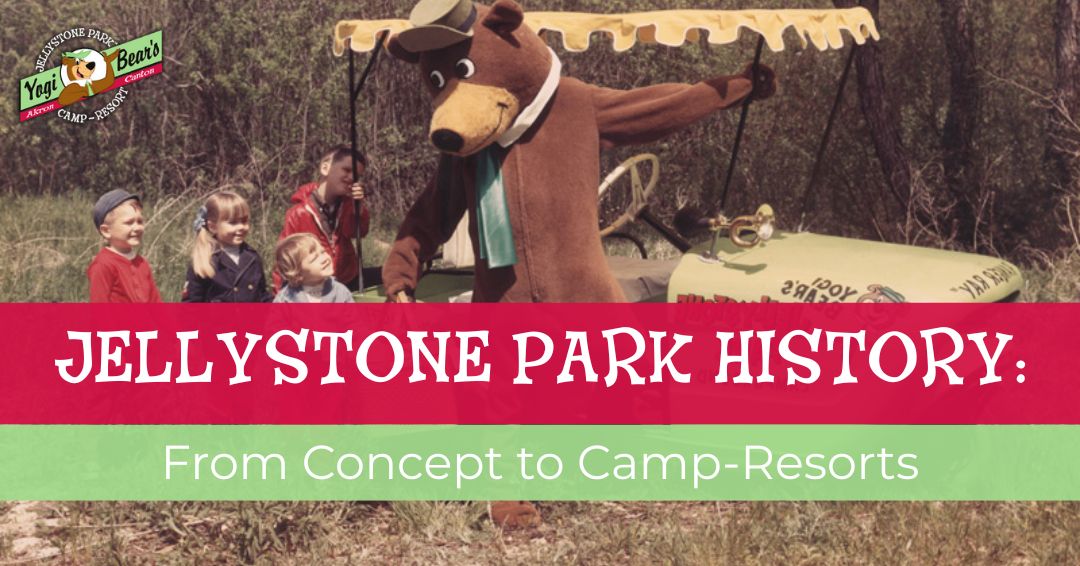
The history of Jellystone Park is a heartwarming tale that begins with one man’s vision and grows into a beloved family camping tradition spanning over five decades. What started as a simple idea on a Wisconsin highway has become synonymous with quality family entertainment and outdoor adventure across North America. This remarkable journey showcases how innovation, beloved cartoon characters, and a commitment to family fun created an enduring legacy in the camping industry.
The Birth of a Vision (1968-1969)
The history of Jellystone Park traces back to the summer of 1968, when advertising executive Doug Haag had a life-changing moment while driving down a Wisconsin highway. While watching families pull trailers, Haag envisioned something revolutionary: a “destination” campground where families could do more than just pitch a tent. A place where they could spend quality vacation time swimming, playing, and enjoying nature together.
Doug Haag, along with his business partner Robert Borkovetz, purchased 30 wooded acres in Sturgeon Bay, Wisconsin, for approximately $3,000. But they needed something special to distinguish their campground from countless others across the country.
The breakthrough came unexpectedly one Saturday morning in 1969 when Haag overheard his children watching cartoons. As Yogi Bear™ proclaimed, “OK, Boo Boo™, let’s get our pic-a-nic baskets ready; the campers are coming!” Haag had his eureka moment: Jellystone Park™ would be the perfect name for a family vacation destination.
Haag traveled to New York City to meet with executives at Screen Gems, the agency that licensed the Yogi Bear and Jellystone Park names. Armed with hand-drawn sketches and infectious enthusiasm, he convinced them to grant him the license to use these beloved characters for his revolutionary campground concept.
Grand Opening and Early Success (1969-1971)
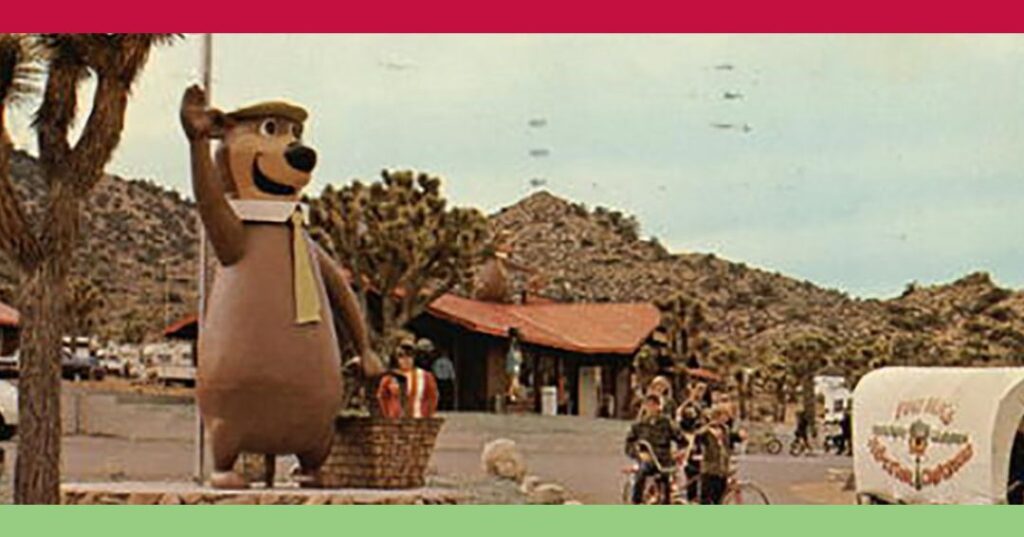
Construction on the first Jellystone Park began in April 1969, and remarkably, the park opened just three months later in July. The initial success exceeded all expectations. The grand opening drew three times as many guests as anticipated, forcing some families to camp in nearby fields and playgrounds.
For just $3.50 per night, campers enjoyed attractions such as a swimming pool, a fishing pond, and a playground, along with the novelty of Yogi Bear theming throughout the property. This affordable pricing made quality family camping accessible to more families, establishing a tradition that continues today with various campsites and RV sites offering options for every budget.
The concept proved so popular that by 1970, two more locations had opened in Orlando, Florida, and California. Haag’s vision was rapidly expanding, and by the end of 1971, the Jellystone Park network had grown to include ten locations across the country. The franchise model was working beautifully, bringing family-friendly camping with beloved cartoon characters to communities nationwide.
This early success demonstrated that families were hungry for destination camping experiences that offered more than basic amenities—they wanted entertainment, character interactions, and memories that would last a lifetime.
Expansion and Evolution (1974-2000s)
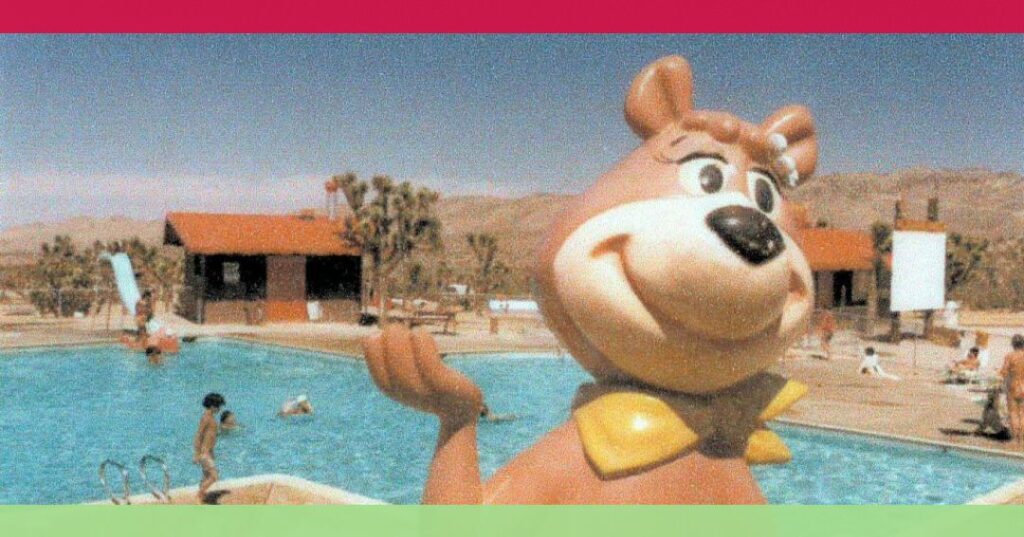
In 1974, Doug Haag passed leadership to Jim Webb and Chuck Chouinard. Under their guidance, the franchise continued to flourish throughout the 1970s and beyond, establishing a reputation for excellence that would earn numerous park awards and recognition over the decades.
One notable success story emerged in Wisconsin Dells, where the Gasser family acquired their Jellystone Park in 1971. This location holds the distinction of being the third oldest in the network and the only Yogi Bear-themed campground continuously owned and operated by the same family for over five decades. By 2020, three generations of the Gasser family had operated this iconic campground, creating a legacy of family entertainment and hospitality that exemplifies the Jellystone Park tradition.
Throughout the 1980s and 1990s, Jellystone Parks continued expanding across the United States and eventually into Canada. The parks evolved beyond simple campgrounds to become true “Camp-Resorts,” offering a wide range of amenities and activities that appealed to modern families seeking outdoor recreation with creature comforts.
This evolution reflected changing family camping preferences, as guests began expecting more sophisticated amenities while still wanting the authentic outdoor experience that made camping special. The franchise adapted by maintaining high standards while expanding offerings to include organized activities, themed weekends, and enhanced facilities.
The Modern Era: Glamping and Destination Camping (2000s-Present)
As camping trends evolved in the new millennium, so did Jellystone Parks. The concept of “destination camping” that Doug Haag pioneered naturally evolved into what we now know as “glamping” (glamorous camping). Jellystone Parks led this trend by expanding their accommodation options beyond traditional tent and RV sites to include deluxe cabins, luxury cottages, treehouses, yurts, and other premium lodging options.
Today’s guests can choose from glamping cabins and lodging that offer the perfect blend of outdoor adventure and modern comfort. These accommodations feature amenities like air conditioning, full kitchens, and private bathrooms while maintaining the camping atmosphere that families love.
Water attractions became increasingly elaborate, with many parks featuring water slides, splash parks, and swimming pools. Land-based amenities expanded to include jumping pillows, mini-golf courses, laser tag arenas, and other family-friendly activities. The character experience remained central to the Jellystone Park brand, with Yogi Bear™, Boo Boo™, Cindy Bear™, and Ranger Smith™ making regular appearances and interacting with guests.
The 50th anniversary of the first Jellystone Park in 2019 marked the franchise’s 11th straight year of record sales, demonstrating the enduring appeal of the concept and the success of the glamping evolution.
Jellystone Park Today
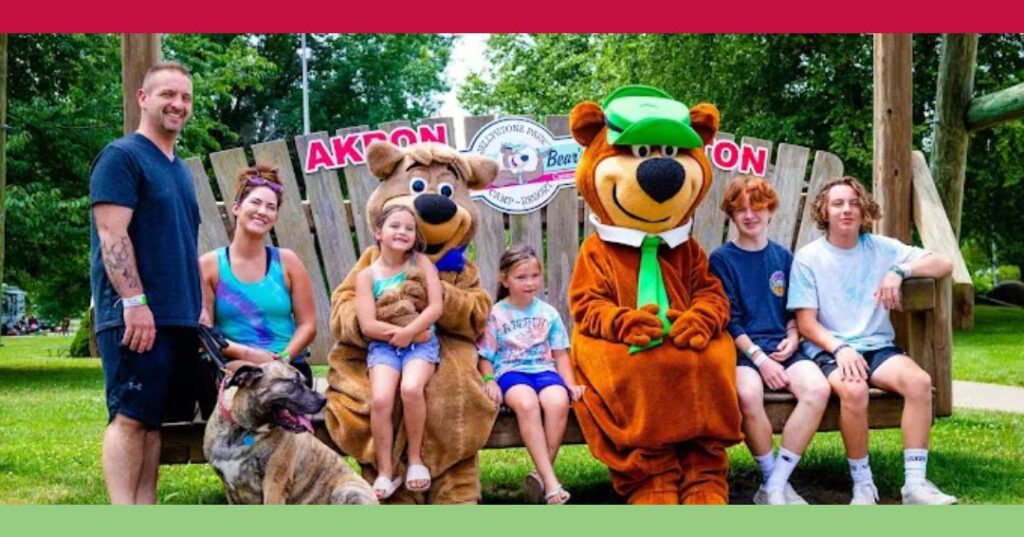
Today, there are more than 75 independently owned and operated Jellystone Park Camp-Resorts across the United States and Canada, with locations in 27 states and four Canadian provinces. The franchise continues to expand, with new parks opening regularly, including recent additions that bring the Jellystone Park experience to previously underserved markets.
Each Jellystone Park location maintains high standards, including a minimum of 100 campsites and 4 full-service cabins, a commercial swimming pool, first-class restroom facilities, a laundry facility, and a retail store. Parks are required to have specific amenities, like children’s playgrounds, video theaters, and covered pavilions, all themed with Yogi Bear elements.
The Yogi Bear character experiences remain a cornerstone of Jellystone Park’s appeal, with scheduled appearances, dance parties, wagon rides, tie-dye workshops, and interactive activities that create magical moments for children and nostalgic memories for parents.
An estimated 2 million guests stay at Jellystone Park Camp-Resorts each year, enjoying accommodations that range from traditional tent sites to deluxe RV sites and luxury lodging options. This variety caters to diverse camping preferences and budgets, ensuring that every family can find their perfect Jellystone Park experience.
Jellystone Park Akron-Canton: From Mini-Golf Dream to Family Camp-Resort
Jellystone Park Akron-Canton has its roots in 1947, when a young entrepreneur named Hoke Hostetler arrived in Uniontown, Ohio, with $300 and a 1941 Plymouth. His original dream wasn’t a campground at all; it was a miniature golf course. He bought seven acres of farmland between Akron and Canton, built the course with help from local high school students, and soon added a large swimming pool and picnic grounds as the attraction took off.
Families loved the place so much that they started pitching tents to stay overnight. Hostetler responded by gradually adding campsites, eventually creating the foundation of the campground locals long knew as Clearwater Park. Over the decades, it evolved into a full-fledged family destination with swimming, camping, and classic summer recreation all on one property.
In the early 2000s, ownership passed to Mert and Charlene Yoder, who continued to expand the amenities and, in 2013, brought the property into the Yogi Bear’s Jellystone Park™ Camp-Resort franchise. Today, Jellystone Park™ Akron-Canton spans about 46 acres with RV sites, tent sites, cabins, and the regionally famous Clearwater Park pool, plus mini-golf, themed weekends, and activities that fully embrace the Jellystone Park brand of family fun.
Ready to experience the magic of Jellystone Park for yourself?
The rich history of Jellystone Park comes alive when you visit, and there’s no better place to create your own family memories than at Jellystone Park Akron-Canton. With comfortable accommodations, exciting activities, and the beloved Yogi Bear characters waiting to welcome you, your family can become part of this special camping tradition that has brought joy to millions of families for over 50 years.
Want to see the history come alive? Come experience the magic of Jellystone Park at Jellystone Park Akron-Canton. Book your family getaway now and create memories that will last a lifetime!
Frequently Asked Questions
When did Jellystone Park first open?
The first Jellystone Park opened in Sturgeon Bay, Wisconsin, in July 1969, just three months after construction began.
Who founded Jellystone Park?
Advertising executive Doug Haag conceived and opened the first Jellystone Park after being inspired by families camping and his children watching Yogi Bear cartoons.
How many Jellystone Parks are there today?
There are more than 75 independently owned and operated Jellystone Park Camp-Resorts across the United States and Canada, located in 27 states and four Canadian provinces.
When did Akron-Canton become a Jellystone Park?
2013.